
- Why is attire so important in rhythmic gymnastics?
- What should the regulation outfit look like?
- Items NOT permitted
- Did you know…?
- Conclusion: the overall look is everything
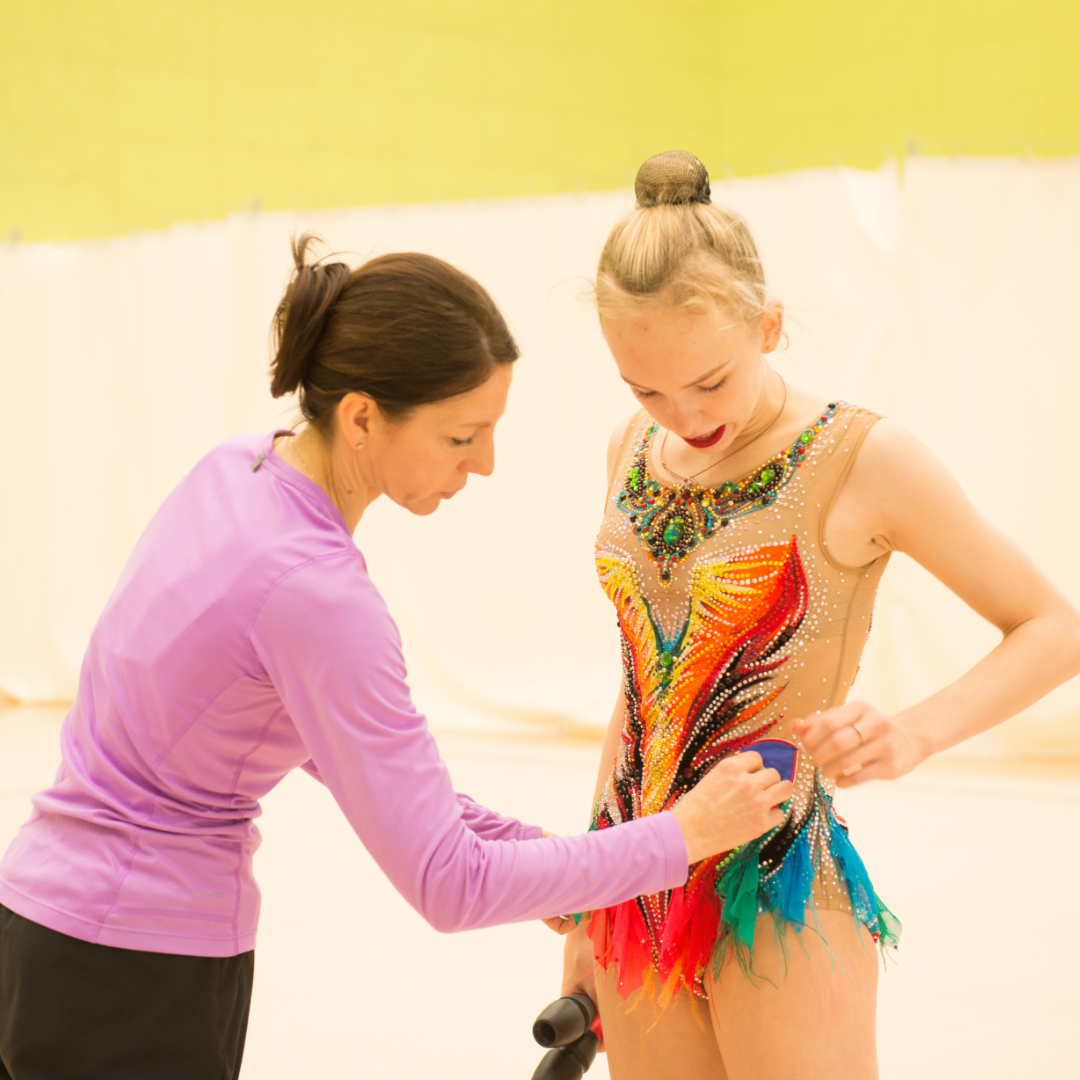
In rhythmic gymnastics, every detail counts. Technique, expression, coordination and also clothing are key elements of this discipline. The outfit needed to compete is not a simple decoration but a set of essential elements for the presentation and performance of routines on the carpet. There are very precise rules, and a mistake in any of these areas can lead to a penalty. In this article you will discover what a complete regulation outfit looks like, which items are allowed, which are prohibited, and some curiosities that will surprise you.

Why is attire so important in rhythmic gymnastics?
Attire in this discipline combines function, aesthetics and regulation. It is not just about looking good: the outfit must allow correct technical execution, highlight body expression and comply with international rules. Judges need to clearly assess every line of the body, every rotation and every balance, which is why the leotard, hairstyle and footwear must be perfectly controlled. A lack of secure fit or a detail outside the rules can mean the loss of key points.
What should the regulation outfit look like?
1. The Leotard
The leotard in rhythmic gymnastics was not always as eye-catching as it is today. In its early days, plain designs without a skirt predominated, intended to show off each movement of the body with precision. From the 2000s onwards, the small integrated skirt began to gain prominence, adding dynamism and elegance to the outfit. Today, the leotard serves not only a technical function but also an artistic one: crystals, embroidery and colours make each design unique, like a visual extension of the music and body expression.

What should the leotard be like?
- Fitted to the body: it should fit like a "second skin". A gymnast may not wear a leotard that is clearly not her size, as this could interfere with the exercises and make it harder for judges to reach a verdict.
- Neckline: it cannot go below the midpoint of the sternum at the front, nor below the lower line of the shoulder blades at the back.
- Sleeves: long, short or sleeveless designs are allowed. Thin straps are not permitted.
- Sheer fabrics: not allowed, except if they are lined with fabric in the same shade as the leotard or in a nude colour.
- Leg line: it must not rise above the groin crease.
- Decoration: rhinestones, sequins or embroidery are allowed, provided they do not come loose or interfere with the exercise.
- In group routines: the leotards of gymnasts performing in a group must all have the same design and colour.
2. Footwear
Gymnasts must compete wearing toe shoes. This footwear offers protection and flexibility for the foot. If gymnasts do not wear toe shoes, or if they come off during competition, this is considered an inappropriate presentation of the outfit under the FIG Code of Points and may be penalised depending on how it affects the routine. This is because it interrupts the harmony of the exercise and can affect the safety and fluidity of the movement.

3. Hairstyle
- Hair must always be pulled back, firmly and securely.
- Buns are the most common hairstyle and must be well secured and keep hair away from the face. Keeping hair pulled back helps gymnasts feel more secure and focused on the exercise. Large decorations or items that could come loose are not permitted, such as hanging ribbons or poorly fastened headbands.
- A hairstyle that comes undone can lead to a penalty. For this reason, it is recommended to use hairnets and hairpins in the same colour as the hair to keep it in place without distractions.

See the blog "Complete Guide to Making a Rhythmic Gymnastics Bun"
4. Makeup and nails
- Makeup in rhythmic gymnastics is part of the presentation. It should enhance the face and expression without being exaggerated. It can complement the leotard, as long as it does not stand out, form shapes or designs, or look theatrical. It is recommended to choose a long-lasting, waterproof makeup so that it lasts throughout the entire routine.

- Nails must be kept short to avoid snagging or possible accidents. Painting nails is allowed, as there are no specific rules prohibiting it, and some gymnasts use it to complement their outfit. Although there are no strict rules on nail polish, some competitions have recommended not wearing painted nails. It is advisable to check the rules of the specific event.
5. Other permitted items
- Short skirt: it must be attached to the leotard and serve a purely decorative function. It must not move or extend above the height of the pelvis.
- Unitard (full-length bodysuit): it may be used as an alternative to the leotard, covering the legs and arms, as long as it stays fitted and meets the criteria for symmetry and visibility of the body. It must allow judges to see the lines and movements of the body clearly, and both the colour and the decoration must be uniform across the legs and arms. The full-length unitard initially became popular in some countries for cultural or religious reasons, but today some gymnasts choose it for comfort or aesthetic reasons.
- Bandages or protectors: they must be discreet, in skin or white tones. If they are brightly coloured or highly visible, a penalty applies.
Items NOT permitted
In rhythmic gymnastics, any detail outside the rules can lead to a penalty of up to 0.30 points for an inappropriate presentation. These are some of the most frequent mistakes related to regulation attire and the gymnast's image that are prohibited in competition:
- Loose hair or poorly secured hairstyles that come undone during the routine.
- Toe shoes that come off because they are poorly fitted or the wrong size.
- Thin or asymmetrical straps on the leotard, which are prohibited by the rules.
- Unlined sheer fabric over sensitive areas of the body.
- Jewellery, visible piercings or hanging ornaments (such as long earrings, bracelets or necklaces).
- Loose fancy accessories, such as scarves, feathers or decorative hoods.
- Bandages, wristbands or protectors in bright or non-discreet colours.
- Poorly attached decorations on the leotard, such as rhinestones or appliqués that could come off during the exercise.
- Leotard with an inappropriate cut: necklines that are too low or leg lines that go past the groin crease.
Did you know…?
- The rules require that the outfit does not distract either the judges or the audience. For this reason, excessive shine or fluorescent colours are prohibited.
- Top-level gymnasts may have more than 10 leotards per season, with designs created exclusively for each routine.
- Many clubs commission their leotards from specialist designers who can take weeks to hand-embroider crystals.
Conclusion: the overall look is everything
In rhythmic gymnastics, it is not only the execution of technical elements that is valued: the gymnast's overall appearance is part of the presentation. A well-designed leotard, an impeccable hairstyle and appropriate footwear reinforce safety, artistic expression and respect for the rules. The outfit does more than dress the gymnast; it reflects the level and preparation of the team. Whether for an official competition, an exhibition or a training camp, looking after every aspect of the outfit is key to conveying elegance, professionalism and passion for this beautiful sport.

